A flawed fantasy
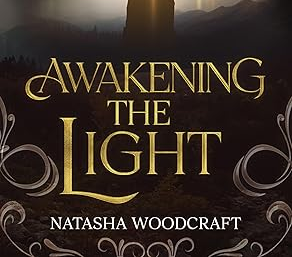
Awakening the Light by Natasha Woodcraft

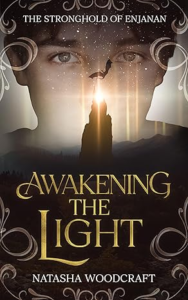
This book has a great premise: A faithful remnant, loyal to Fa-Cel, who is both Creator and Light, resists the devious ruses of the mighty Nahil, who aim to conquer the entire world of Enjanan.
We love little Kallen, the abandoned enjailette, with her simple integrity. We ache with brave Shay as he determines to do what’s right, whatever the cost. And the other family members, each with their very different traits, form a devoted group, holding together to resist the deception of the enemy and, in particular, the ominous Lord Kahola.
The plot
In many ways, the Enja are much like humans; they play games, farm, cook and eat, write messages, argue and fall in love. But some are gifted with supernatural abilities: far-sight, or the ability to generate light or fire.
Jaela, the young daughter, spends her time in the training room, perfecting her sporting skills. She is determined to excel at the national Games. But, now that the Nahil have been invited to participate in the organisation, these Games are becoming increasingly violent. In a final round, Jaela is mortally wounded. However, her spirit impresses Lord Kahola. He offers to take her to his castle and nurse her back to health, using his magical powers. Her father sees through the tyrant’s devious motives. His attempt to release her from his clutches develops into the final battle of the book.
The problems I see
I made the mistake of reading and assessing this as adult fantasy. In retrospect, I realise that the intended younger readers would identify with the teenage players as they face knotty friendships and strive to fulfil their dreams. Loose ends would probably hardly bother them. But I’m an old pedant. Here are the points I take issue with:
- For Enjanan to be seen as a fantasy world, the Enja could be portrayed as very different to humans. But they wear t-shirts and tease each other just like children. At the same time, they don’t seem able to master their peculiar gifts, and we never fully understand their purpose.
- Though endearing, the creatures we encounter, with their fanciful names – Rufus, the family muffler, scrags, caola, bovar, gobblefowl, whispara, gerflock – are in reality very similar to our own domestic animals. Other terms the author introduces are also unconvincing, like ‘joining’ for ‘marriage’ and ‘spin’ for ‘day’, although Enjanan knows minutes, hours, weeks and years.
- The horrifying violence of the contests at the Games are depicted unrealistically, blow by blow, and in excessive detail. Males fight females in cruel, close bodily combat, but with no sexual overtones. In climax, the winged, multi-headed, fire-breathing Flametooth descends and rips the hoodwinked combatants to shreds before consuming them.
- The romance scene between Lord Kahola and the bewitched Jaela is frighteningly explicit, only to be interrupted in an unconvincing way by a summons from his rival, Queen Alihana.
- Implausible is the scene when the huge, winged hybrids, equipped with powerful weapons, fail to overcome the few, weak Enja – Josif the archer, with his seemingly endless supply of arrows and injured, flame-throwing Nattan. Out of nowhere, Shay appears on his borrowed whispara stallion and rescues them.
- I was disappointed that first Hani, in the clutches of Lord Kahola himself, and then Jaela, after she has been reluctantly ‘rescued’, just disappear from the narrative without explanation. A small consolation is the afterword: ‘The story will continue in Pursuing the Light.’
On account of these adult reservations, I can’t rate this book higher. But I hope the intended audience enjoys it.

it is a reliable-blog
Bài chia sẻ chất lượng. Ai đang tìm hiểu du học Hàn Quốc có thể liên hệ Letco — hỗ trợ chọn ngành, học bổng và thủ tục visa nhanh gọn. Chi tiết ở letco.vn.
This is exactly what I needed today. I’ve recently been relying on a job board at https://jaae.elavbotbt.top/ that genuinely changed how I look for work. You can filter by location, employer and salary, and new jobs land every day.
Thanks for the write-up. I bookmarked staffradar.shop a while back and it’s worth a look too.
Hi,how are you