Persuasion? Or wait & hope?
Persuasion by Jane Austen

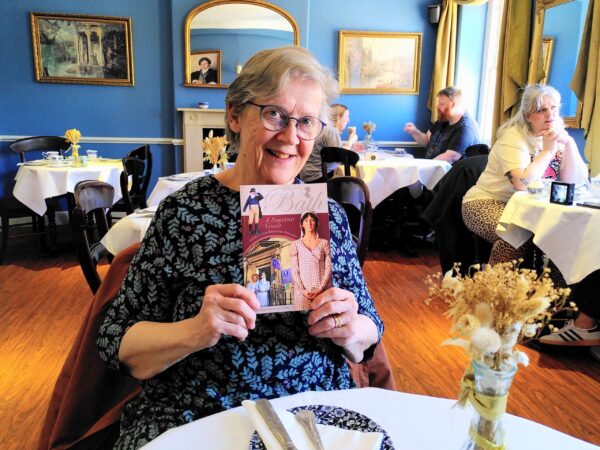
My wife and I recently visited the Jane Austen Centre in Bath and enjoyed the very informative guided tour, followed by a scrumptious cream tea in the Regency Tea Room.
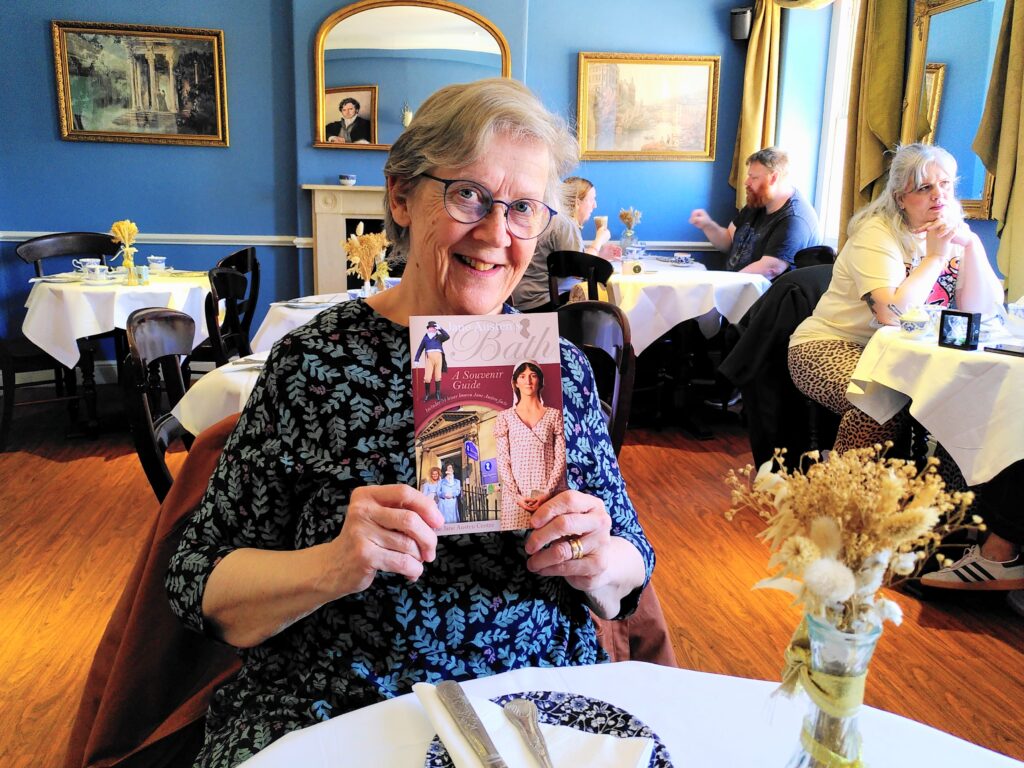
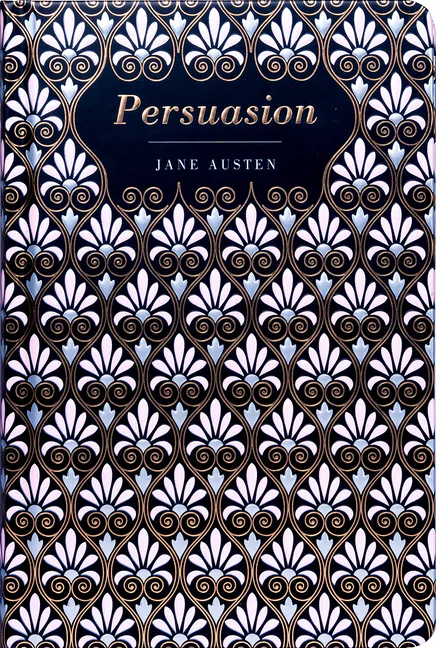
What souvenir should we buy in the Gift Shop? Why, one of her books to read together in the weeks ahead. We picked Persuasion, and it turned out to be quite a read.
The plot
It’s the beginning of the 19th century in rural England. Anne Elliot, ‘with an elegance of mind and sweetness of character, was nobody with either father or sister; her word had no weight, her convenience was always to give way – she was only Anne.’ But, amid illustrious Lords and Ladies, Baronets, Admirals and naval Captains, we see the world through her eyes. She mingles with several eligible young men and hopeful maidens, all more or less related in complicated ways, who interact during dinner parties, casual walks and a trip to the seaside, which latter proves of great consequence. The older folk – parents, widows and widowers – all lend their leverage; but, when it comes to who should marry whom, social status, wealth and career prospects often rank higher than character or love in their estimation.
A modern reader is surprised that the relationships between these young people revolve around intellectual pursuits or gossip but involve neither sensual aspects nor physical contact. Jane Austen skilfully uses overheard conversations about deeply personal matter to influence the hearer’s leanings. An example: As Jane is maintaining that women’s feelings are often deeper and longer-lasting than men’s, an eavesdropper is all ears:
“Yes. We certainly do not forget you as soon as you forget us. It is, perhaps, our fate rather than our merit. We cannot help ourselves. We live at home, quiet, confined, and our feelings prey upon us. You are forced on exertion. You have always a profession, pursuits, business of some sort or other, to take you back into the world immediately, and continual occupation and change soon weaken impressions.”
Persuasion by Jane Austen, page 250
A scene during the interval of a concert almost tips Anne’s relationships in an undesirable direction, when her secret admirer is haunted by watching a very promising partner in intimate conversation with his heartthrob. One has to wonder if this book is really about persuasion or rather a combination of deterrence, chance encounters and patient waiting and hoping for relationships to develop.
The prose
The language is delightful in its richness, but complex. Multiple convoluted clauses, without a full stop, prove challenging to whoever tries to read the text aloud. As Anne reflects on the character and demeanour of a prospective suitor, Captain Benwick, she recounts – in one long sentence – their shared literary interests:
For, though shy, he did not seem reserved; it had rather the appearance of feelings glad to burst their usual restraints; and having talked of poetry, the richness of the present age, and gone through a brief comparison of opinion as to the first-rate poets, trying to ascertain whether Marmion or The Lady of the Lake were to be preferred, and how ranked the Giaour and The Bride of Abydos; and moreover, how the Giaour was to be pronounced, he showed himself so intimately acquainted with all the tenderest songs of the one poet, and all the impassioned descriptions of hopeless agony of the other; he repeated, with such tremulous feeling, the various lines which imaged a broken heart, or a mind destroyed by wretchedness, and looked so entirely as if he meant to be understood, that she ventured to hope he did not always read only poetry, and to say, that she thought it was the misfortune of poetry to be seldom safely enjoyed by those who enjoyed it completely; and that the strong feelings which alone could estimate it truly were the very feelings which ought to taste it but sparingly.
Persuasion by Jane Austen, page 111
Appraisal
The plot is devious, the number of characters almost overwhelming, but the rich language and the delightful way Austen conjures scenes and reveals personalities, while at the same time giving deep insight into the British culture at the beginning of the 19th century, makes this a novel truly worth wading through.
it is a very good-piece of writing